
A neutral monetary policy stance, heavy government borrowing, and issuers adjusting to a higher-for-longer yield environment have set the stage for a largely stable corporate bond market in 2026.

Activity in the corporate bond market is set to gain momentum following a 25-bp policy repo rate cut by the rate-setting panel of the Reserve Bank of India (RBI). State-owned public cebPower Finance Corporation (PFC) and Small Industries Development Bank of India (Sidbi) are planning to raise up to Rs 11,500 crore through bonds on Tuesday as issuers expect borrowing costs to ease.

* Repo rate reduced by 25bps to 5.25 pc; * 4th rate cut, totalling 125 bps, since February 2025; * MPC also decided to continue with neutral stance; * GDP growth forecast for FY26 raised to 7.3 pc from 6.8 pc;

Dabur's business update for Q3FY26 indicated mid-single digit consolidated revenue growth. The guidance is that growth in operating and net profits will beat revenue growth. In the domestic business, home and personal care (HPC) revenue grew in double digits, while healthcare is likely to post a sequential growth in low-single digits.

Investors encountering underperformance must be patient.

A host of macroeconomic data announcements, global trends and trading activity of foreign investors would dictate investors' sentiment in the stock market this week, analysts said. Besides, auto sales data will be closely tracked, experts noted.

Following the death of 22 children due to consumption of contaminated cough syrups in Madhya Pradesh three months ago, the Union health ministry has proposed amendments in the country's drug rules to ensure a tougher criterion for their over-the-counter (OTC) sales in India.

From Rs 73k to over Rs 1.2L between January-December 2025 -- is buying gold in 2026 still sensible?

From the 30-Sensex firms, Trent, Infosys, Bharti Airtel, Tech Mahindra, Bharat Electronics and Maruti were among the biggest gainers. However, State Bank of India, Kotak Mahindra Bank, Larsen & Toubro and Titan were the laggards.

'The bigger unknown remains global geopolitics, which is inherently unpredictable, including developments in our neighbourhood.' 'Another concern is the increasing tilt of government finances towards welfare subsidies, especially at the state level.' 'This could constrain capital expenditure, which is critical for long-term growth.'

The Enforcement Directorate on Thursday said it has restituted funds worth more than Rs 300 crore towards long-pending dues of the former workers of now defunct Kingfisher Airlines that was promoted by fugitive liquor baron Vijay Mallya.

The Indian economy is growing at a robust pace, driven by strong domestic demand, low inflation, and the healthy balance sheets of banks, said a Reserve Bank report released on Wednesday.

Gold and silver prices are poised to maintain their record-setting rally in the coming week as investors focus on global inflation data and key macroeconomic indicators that shape central bank policy paths, analysts said.

Is there an expiry date for a bra or briefs? When do they cease to give support?

'...aggressive pricing amid volatility, but these are exceptions.'

'A solid motor, once ignited, burns until the propellant is exhausted. It cannot simply stop mid-burn,' said a retired senior ISRO official. 'That is what makes this failure puzzling.' Venkatachari Jagannathan reports on the latest PSLV failure.

Rural India outpaced urban centres in passenger vehicle sales in 2025, recording a growth of 12 per cent compared with 8 per cent in cities.
SoftBank's early India bets are beginning to deliver. The Japanese investor, which clocked nearly 5.4x returns on Lenskart and chose to stay invested in Meesho ahead of its public listing, has so far returned close to $7 billion from India to its global investors.

Investors seeking higher returns at relatively higher risk should consider allocation to smallcap equity funds.

The banking sector could see better loan growth in the third quarter of financial year 2026 (Q3FY26) with improved net interest margins (NIMs), though the full impact of latest rate cuts will be largely felt in the fourth quarter. There may be lower slippage in unsecured loans and microfinance institutions (MFIs) along with steady recovery trends, which should lower credit cost.
Among Sensex firms, Tata Steel, Eternal, UltraTech Cement, Larsen & Toubro, Maruti and Bharti Airtel were the major gainers. However, Hindustan Unilever, Sun Pharma, ITC and Asian Paints were among the laggards.

The rupee slumped 5 per cent in 2025 as persistent capital outflows from foreign investors, alongside heightened dollar demand from importers, making it one of the worst-performing Asian currencies.

Largecap equity funds remain suitable for conservative and moderate risk-taking investors seeking relatively stable returns.

Eighteen new-age technology firms went public during the year, a near triple increase from the five firms that debuted in 2023 and 38 per cent more than 2024's tally of 13.

'Having a separate healthcare corpus is extremely important even for those already covered by health insurance.'

Gold prices surged by Rs 4,000 to touch an all-time high of Rs 1,37,600 per 10 grams in the national capital on Monday, tracking firm global cues, according to the All India Sarafa Association. The precious metal of 99.9 per cent purity had closed at Rs 1,33,600 per 10 grams on Friday.

Over 50 per cent, or 660 stocks, from the BSE 1000 index recorded negative returns during CY25.

Foreign investors pulled out Rs 17,955 crore (Rs 2 billion) from Indian equities in the first two weeks of this month, taking the total outflow to Rs 1.6 lakh crore (Rs 18.4 billion) in 2025.' This sharp withdrawal follows a net outflow of Rs 3,765 crore in November, extending the pressure on domestic equity markets.
The surge has come alongside a decline in average issue sizes and more muted listing-day returns compared with last year.

The sheer dress, lovingly (and boldly) known as the naked dress, has been a staple in celeb wardrobes for a while now.

2025 was the year blouses stopped being just blouses. They became the star of the outfit.

India is set to take its first steps towards its own human space flight when the uncrewed Gaganyaan mission soars to the skies later this year. Private players in the space sector are also gearing up for launching satellites on home-built rockets.

Stock markets are likely to trade in a range-bound manner in a holiday-shortened week where trading activity of foreign investors, currency movement and global macroeconomic data announcements are expected to drive sentiments, analysts said. Several global markets may see subdued activity on account of Christmas and New Year holidays, an expert said.

Various stakeholders told the committee that there is a need for expanding judicial capacity or restructuring the adjudicatory process by increasing the number of benches and also enhancing financial allocation for improvement of infrastructure.

Ask rediffGURU Reetika Sharma your insurance, mutual fund and personal finance-related questions.

Reserve Bank of India (RBI) Governor Sanjay Malhotra, and Deputy Governors Poonam Gupta, T Rabi Sankar, Swaminathan J, and S C Murmu on Friday addressed issues during the post-policy media interaction.
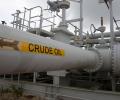
India has gained the least since Russia invaded Ukraine in February 2022 and was penalised the most, while the US, China and the European Union emerged as the biggest beneficiaries from the war.

Malaika Arora doesn't just turn heads, she sets the gold standard (quite literally) in a Manish Malhotra outfit.

There is a decisive shift in how cancer may soon be confronted and, hopefully, defeated.

The satellite, weighing about 4,410 kg will be the heaviest to be launched from the Indian soil and into a Geosynchronous Transfer Orbit (GTO), the space agency said. The satellite will travel onboard a LVM3-M5 rocket, dubbed as 'Bahubali' for its heavylift capability.
